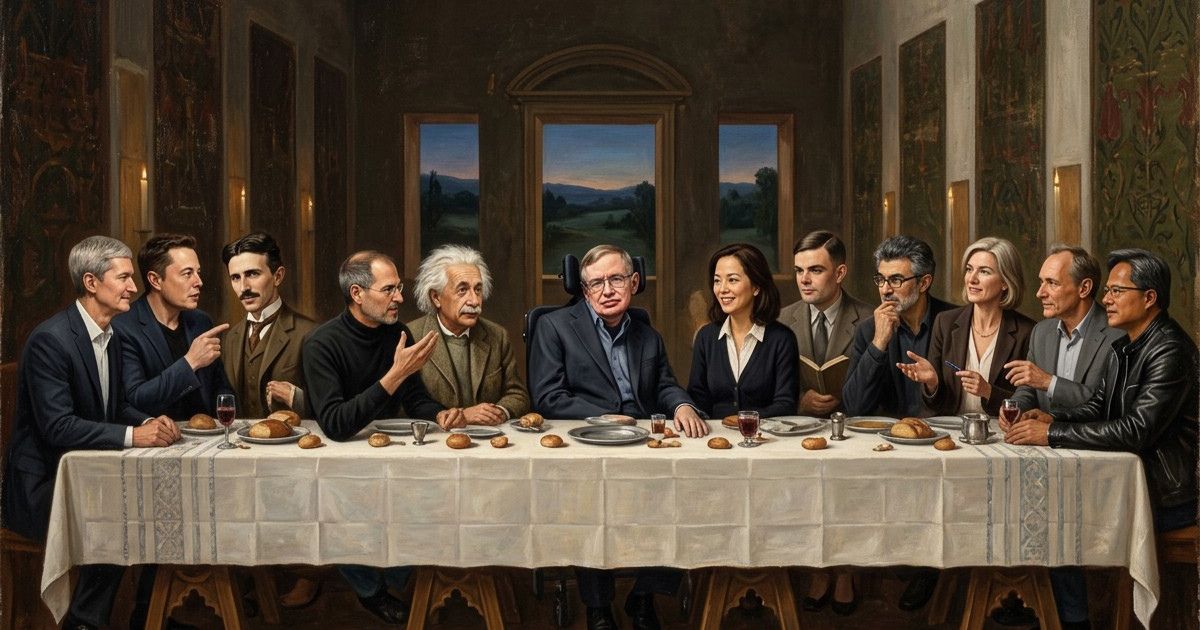
A recurring debate within mainstream longevity circles centers on the friction between “healthspan” and “lifespan”. The prevailing cultural consensus argues that extending life is only ethical or desirable if those additional years are characterized by vibrant, physical health—the ability to run, travel, and exist seamlessly within the traditional biological paradigm. Critics of extreme lifespan extension often frame the pursuit of absolute time as a billionaire’s vanity project, advocating instead for “practical wellness” and the optimization of our natural biological peak.
Senhara fundamentally rejects this premise.
We assert that the obsession with “healthspan” is a symptom of biological romanticism. It prioritizes the aesthetic of a highly functioning ape over the preservation of the intellect. For Senhara, the primary directive is absolute lifespan, strictly defined as cognitive continuity.
Human history has been shaped by scarcity, fragility, and the struggle to survive. When survival pressure decreases, human attention is liberated. If a human being is physically immobilized or suffering from systemic biological failure, yet their mind remains capable of producing profound ideas, solving global problems, and providing authentic commentary on the human condition, it is a civilizational imperative to keep them alive.
Consider the irreplaceable minds of Stephen Hawking, Steve Jobs, or Albert Einstein. Hawking’s physical “healthspan” ended decades before his lifespan did. Yet, confined to a wheelchair and stripped of biological mobility, his preserved cognitive continuity fundamentally reshaped our understanding of the universe. To demand “healthspan” as a prerequisite for life extension is to suggest that a brilliant mind trapped in a failing chassis is not worth preserving. This is a profound error in human valuation.
Furthermore, the “healthspan” argument ignores the temporal nature of medical engineering. What we classify as an “unhealthy” or “broken” state today is merely an engineering constraint waiting for a solution.
If we allow a mind to expire because its current biological state is deemed “unlivable” we permanently rob that individual of tomorrow’s cure.
Historically, reliance on external machines to pump blood or filter toxins was viewed as an agonizing, unnatural state; today, pacemakers and dialysis are standard, accepted bridges to continued life.
Tomorrow, severe physical immobilization mitigated by advanced Brain-Computer Interfaces (BCI) will not be viewed as a tragedy, but as a functional, alternative state of existence.
This does not mean Senhara ignores the quality of human experience. However, we categorize mobility, physical joy, and sensory satisfaction as secondary engineering challenges. We track these under the domain of Pleasure Engineering. A mind must first survive before it can optimize its joy. The endpoint is continuity with increasing independence from biological failure.
The brain is the decisive frontier. We must stop romanticizing the death of great minds simply because their biological vessels have expired. Continuity is the priority; the chassis is negotiable.